Reach their ideal weight, together.
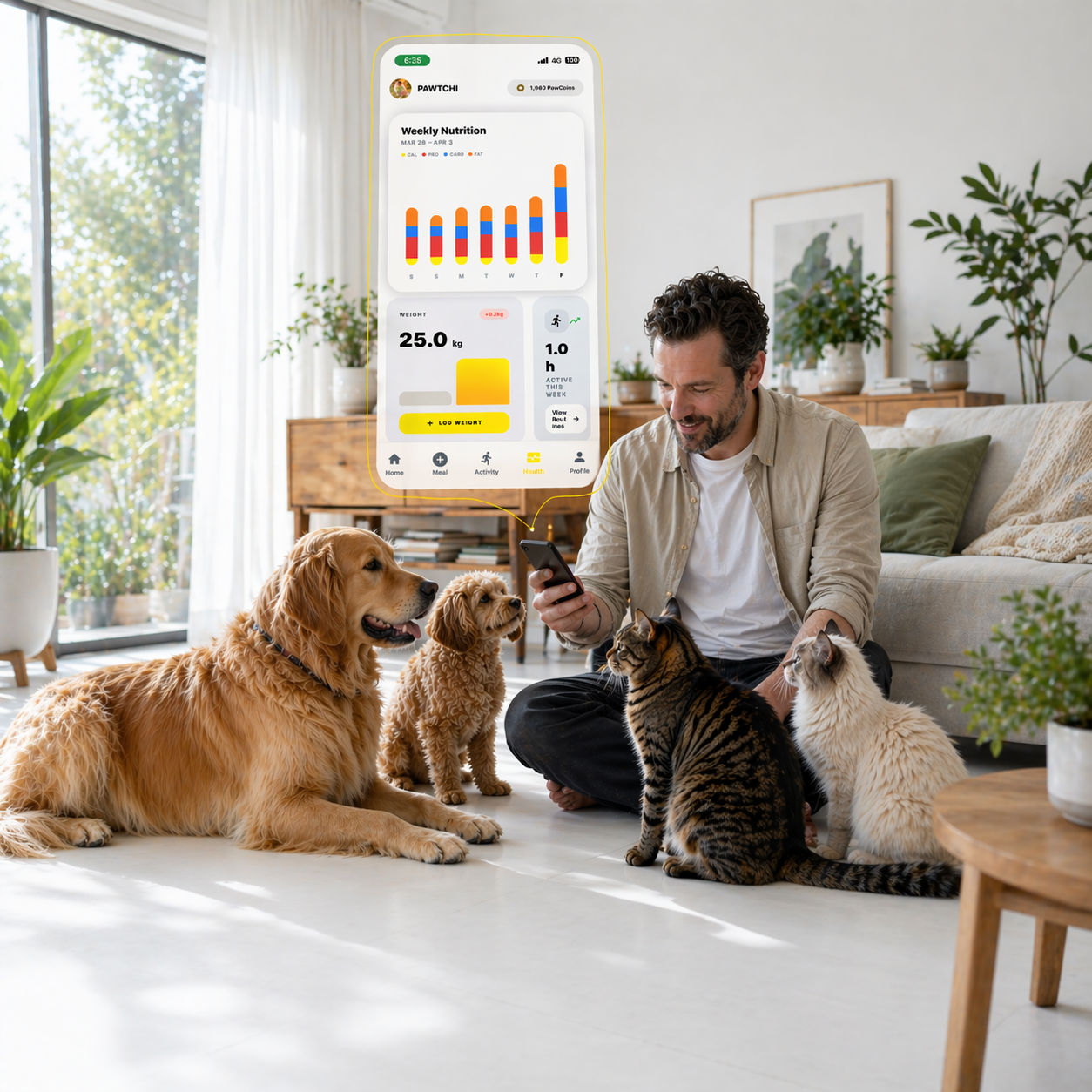
Log a weigh-in, check body condition by hand, and see weight charted against food and activity, so a slow gain shows up early.
- Weight trends over weeks and months
- Hands-on body condition check
- A goal weight to work towards
- No guilt messaging, ever


Weight creeps. A few hundred grams a month is invisible day to day, which is why about 41% of dogs seen at Australian vet practices in one large study were overweight or obese. The RSPCA suggests three checks you can do at home: a visible waist from above, ribs you can feel under a thin layer of fat, and a tummy that tucks up from the side.
Pawtchi brings those checks into the app as a guided, hands-on body condition check, and pairs it with a simple weight log. Weigh-ins are charted over weeks and months next to food and activity, so you can see what is moving the number.
If there is weight to lose, Pawtchi sets a goal and adjusts the daily calorie target to get there slowly. Progress is shown plainly, with no blame and no alarm bells. For the checks in detail, see our guide Is my dog overweight?
Touch beats sight
A fluffy coat can hide a lot. The guided check uses your hands, the way vets assess body condition.
The whole picture
Weight sits next to food and activity, so a change has context.
Slow and steady
A goal weight sets a gentle calorie target, not a crash diet.
Ready for the vet
Weight history goes into the health report you can share at the next visit.
Sources: McGreevy et al., Prevalence of obesity in dogs examined by Australian veterinary practices and the risk factors involved, Vet Record 2005 (PMID 15923551); RSPCA Knowledgebase, How do I tell if my dog is overweight?